Germination Under the Microscope: Mechanism, Evidence and Analysis
Germination Under the Microscope: Mechanism, Evidence and Analysis
The Biology of Seed Germination
HIGH SCHOOL Grades 9-12 (Ages 14-17) | Cells, Energy, Regulation & Evidence
Other Ways of Ordering: Seed Gallery Academic Posters | All-in-One Seed Academic Ebook =======================================================
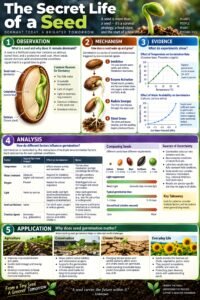
Germination is examined through deeper biological mechanisms. Students explore hydration, enzyme activity, cellular respiration, reserve mobilization, environmental responses, dormancy, and introductory hormonal regulation. Diagrams and data-oriented thinking connect molecular processes with visible development.
Learning focus: Mechanism • Evidence • Analysis • Application
=======================================================
At High School Level, seed germination becomes much more than a diagram showing a root emerging from a seed.
It becomes a mechanistic biological problem.
The High School Version of “The Secret Life of a Seed — What Happens When a Seed Wakes Up?” is organized around a progression of observation → mechanism → evidence → analysis → application.
The observable phenomenon is straightforward.
A viable dry seed placed under suitable conditions takes up water, increases metabolic activity, undergoes growth, and eventually produces an emerging radicle.
But what connects those events?
Water uptake through imbibition hydrates cellular structures and macromolecules. Metabolic pathways become increasingly active. Stored reserves are mobilized, providing substrates for respiration and biosynthesis.
Aerobic cellular respiration can be summarized conceptually as:
glucose + oxygen → carbon dioxide + water + usable chemical energy
The actual biochemical pathway is far more complex than this summary equation, but the relationship helps explain why oxygen availability can influence germination and early growth.
Students can also examine the roles of plant hormones.
In many seeds, abscisic acid (ABA) is associated with the maintenance of dormancy, while gibberellins (GA) can promote processes associated with germination. Their interactions are context-dependent, and reducing germination to a single “on/off hormone” would be misleading.
Environmental variables add another layer.
Temperature influences biochemical reaction rates and membrane behavior. Water availability affects hydration. Oxygen availability influences aerobic respiration. Light can promote or inhibit germination in some species, while other seeds are comparatively insensitive to it.
Consequently, “seeds need water, warmth, oxygen, and light” is too simplistic as a universal rule.
The High School Level encourages students to interpret evidence instead.
Imagine comparing germination percentages across several temperatures.
A graph might show an optimum range for the species being studied rather than a simple relationship in which “warmer always means faster.” Extremely low or high temperatures may reduce germination or delay it.
Students should ask whether observed differences are meaningful, whether enough seeds were tested, whether variables were controlled, and whether the evidence justifies the conclusion.
Germination rate can also be distinguished from final germination percentage. Two treatments might ultimately produce similar percentages but reach them at different rates.
That distinction introduces a fundamental scientific principle: the measurement chosen influences the question being answered.
Applications are abundant.
Agriculture depends on successful establishment of crops. Ecologists investigate recruitment of plants into populations. Restoration specialists may need to understand dormancy and germination cues. Seed banks manage seeds under conditions designed to preserve viability. Horticulturists manipulate environmental conditions to improve propagation.
Yet real systems remain complex.
A laboratory germination test does not perfectly reproduce a field environment. Soil structure, pathogens, competition, fluctuating temperatures, water availability, seed predation, and other factors can alter outcomes.
That is why the poster treats models and experiments as tools rather than perfect copies of nature.
For high school classrooms, AP/IB preparation, homeschool programs, laboratories, STEM spaces, and independent study, this infographic poster provides a bridge between introductory plant science and university level biology.
Order the High School Seed Academic Edition Infographic Poster level individually or explore the complete gallery to compare how germination is explained at other academic levels. Give copies away to science classrooms, clubs, libraries, or gardening programs, or gift one to a student, teacher, aspiring botanist, environmental scientist, or future researcher. For further learning, find out more about the other dimensions of learning “The Secret Life of a Seed” in the Seven Complementary Educational Dimensions
A seed “waking up” may sound simple.
At high school level, the challenge is discovering the mechanisms hidden beneath that beautifully simple observation.
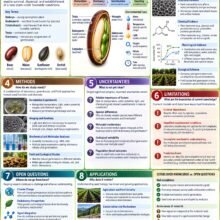
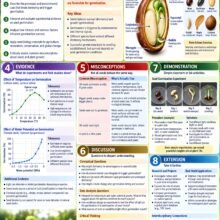


Pingback: The Secret Life of a Seed – Learning or Academic Dimension